the trestle
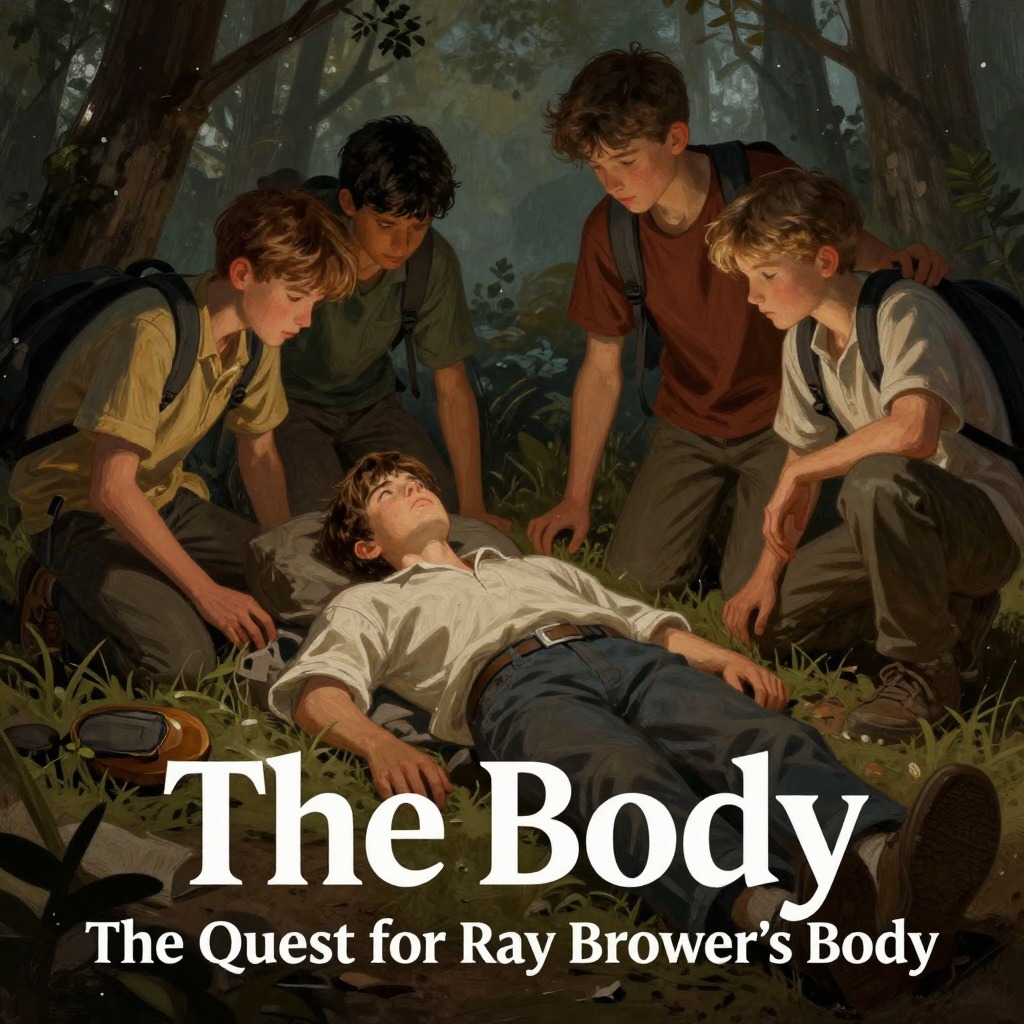
The trestle is the GS&WM railroad bridge that carries the tracks across the Castle River between Castle Rock and Harlow, a narrow wooden platform fifty feet above the water that becomes the most harrowing physical and symbolic ordeal of the boys' journey to find Ray Brower's body. It is the point where their adventure shifts from a lark into a genuine confrontation with mortality, testing their courage, their loyalty, and their willingness to face death for the sake of a dare.
Structure and Setting
The trestle spans the Castle River at a point where the water is better than a hundred yards across, supported by tarred wooden posts and crisscrossing beams driven ten feet deep into the riverbed. The rails run over a long, narrow platform of six-by-fours with a four-inch gap between each pair of beams, through which the water is visible fifty feet below. On either side, there is no more than eighteen inches between the rail and the edge of the trestle—barely enough room to avoid being swept off by the wind of a passing freight. The river itself is shallow and clear enough to see bottom, but no fish jump there; the water smells like a laundry hamper full of mildewy towels, and dirty collars of foam cling to the rocks along the edges. The bulking forest on the Harlow side looks like a different country altogether, the pines and spruces bluish in the heat-haze of the afternoon.
The Crossing
The four boys—Gordon Lachance, Chris Chambers, Teddy Duchamp, and Vern Tessio—reach the trestle around three-thirty on the first day of their hike. Teddy, eager and reckless, is the first to edge his way out onto the six-by-fours, claiming he could hang from the supports if a train came. Chris dares the others, and they cross single file: Chris first, then Teddy, then Vern, with Gordon playing tail-end Charlie because he had said dares go first. The embankment drops away beneath them, and every step further out seals their decision more firmly. Gordon stops in the middle, dizzy and disoriented, seeing phantom crossties float before his nose. He squats and grips the rail, feeling it thrum violently—his first and last psychic flash. The vibration is so intense that it feels like gripping a bundle of deadly metallic snakes. His bowels turn to water, a thin stream of urine runs down his thigh, and his muscles lock in a dreadful paralysis. He screams "TRAIN!" and the paralysis breaks. He runs, driving Vern ahead of him, as the freight's horn blasts and the trestle begins to shake. They jump just as the train charges across, landing full-length in the dust and cinders. Gordon never sees the train; he claps his hands over his ears and digs his face into the hot dirt as it passes, metal squalling against metal.
Consequences and Aftermath
The crossing leaves the boys shaken but exhilarated. After the train passes, they sit in the shade on the Harlow side, drinking Cokes and laughing. Gordon reflects that he was not just scared but "fuckin petrified," and the shared terror bonds them. The trestle becomes a threshold they have crossed together, a rite of passage that separates the ordinary world of Castle Rock from the dangerous, liminal space of the woods where Ray Brower lies dead. Later, when they return on Sunday morning, they walk across it again without incident, too exhausted to fear. The trestle itself is eventually removed—Gordon notes years later that it is gone—but the memory of that crossing remains one of the defining moments of the trip, a test of nerve that they passed together.
Narrative and Thematic Significance
The trestle functions as the central ordeal in the boys' journey, a physical manifestation of the risk and commitment required to reach the dead boy. It is the place where Gordon experiences his most intense fear, a moment of pure animal terror that strips away all pretense. The crossing also foreshadows the later confrontation with Ace Merrill's gang, where Chris must again stand his ground against a greater force. The trestle is a symbol of the narrow line between life and death, between childhood bravado and real danger, and it marks the point after which the adventure can no longer be undone.